Know the doctor. Put practice to work in the next meeting.
Identify the doctor’s interests and decision criteria from real meetings. Rehearse how to ask and explain for that doctor, then use it in the next real meeting.
01 Record real meetings02 Practice for that doctor03 Use it in the next meeting, then reflect
SIMY, told through a comic
Take the doctor’s wordsand work through them in practice. Take that preparationinto the real conversation.
Fictional characters, doctor roles and dialogue illustrate a proposed use. Real meeting records are kept distinct from AI roleplay. Recording permissions and integration details are reviewed during implementation.
01 / Hear the doctor’s concerns
MRDoctor: “I’d like to check the basis of that comparison.” Bring those words into the next preparation.
Record the real meeting with the required consent and in line with company and facility rules. Preserve the doctor’s words alongside the surrounding conversation.
02 / Identify interests and follow-up questions
SIMYWhat the doctor wants to check is whether the study population reflects their own practice. Is that right?
Organize statements, concerns and follow-up questions from recordings and transcripts. The MR checks the interpretation against the original conversation.
03 / Rehearse the questions for the next meeting
SIMYBuilding on the previous follow-up question, practice asking which comparison conditions matter.
Combine public information and approved materials with what the real meeting revealed. Set questions and responses around that doctor’s interests and the next meeting’s purpose.
04 / Try saying it out loud
MRMR: “I’ve brought the comparison materials.” AI doctor: “Before that, which patient population are we discussing?”
The explanation began before the doctor’s question was clarified. Practice helps reveal where the conversation went off track.
05 / Change the question and try again
MR“Which differences in patient characteristics concern you?” This time, start with what the doctor wants to clarify.
Try again with the same doctor role. Review the relevant statements and refine the order of questions and how evidence is explained.
06 / Use the rehearsed question in the next meeting
MRMR: “Which differences in patient characteristics concern you?” Doctor: “I want to clarify the differences in prior treatment. Next, I’d also like to discuss responsibilities in the hospital.” The rehearsed question helped me ask which conditions the doctor wanted to clarify.
Try the revised way of asking in the real meeting. Record the doctor’s response and new follow-up questions with consent and in line with company rules, then use them to prepare for the next visit.
07 / New conversations update the practice
SIMYNext, alongside the comparison, practice clarifying roles within the hospital.
Reflect new statements and follow-up questions in the next practice. Keep personalizing as conversations evolve, rather than treating the doctor’s interests as fixed.
08 / Turn individual reflection into team development
Branch manager / Training teamWho needs support, and in which situations? Let’s use that insight in the next training.
Identify practice trends and challenges within agreed sharing permissions. The proposed approach supports individual coaching and improvements to training materials.
PREPARE, PRACTICE, PUT INTO ACTION
Turn insights and practice into action at the next meeting.
Review the doctor’s interests and the conditions they want to clarify from the last meeting. Rehearse how to ask and explain, then use that preparation in the next real conversation. Reflect on the doctor’s response to prepare for the following visit.
Record and transcribe the meeting
Review statements and follow-up questions
Rehearse for the next meeting
Use the rehearsed questions in the meeting
Use the doctor’s response to prepare the next visit
What to learn from the meeting
What does the doctor want to clarify?
Topics of interest and repeated questions
Conditions that matter in decisions, such as comparison or safety management
Questions the previous explanation did not resolve
Items promised for confirmation before the next meeting
What to put into action at the next meeting
What should you ask this doctor, and how?
The opening question for the meeting
How to adjust questions and explanations to the doctor’s response
Evidence, conditions and limitations to check in approved materials
Answers to the previous follow-up questions and points still to clarify
Follow company and healthcare facility rules and obtain the required consent before recording. Agree in advance on information use, storage and viewing permissions, and handle patient personal information under internal policies. The responsible person checks AI summaries and inferences against original statements. Safety information, including adverse events, must be promptly escalated through designated reporting channels.
START WITH YOUR MATERIALS
Before recording begins, start with existing materials.
Start with approved materials or internal roleplay recordings while recording procedures are being established. Once real meeting records can be used, add the doctor’s statements and follow-up questions to deepen personalization. Scenario design support for existing AI roleplay tools can also be explored.
Useful starting materials
Build on what is ready.
Approved training materials and sample answers
Defined doctor profiles and expected questions
Internal roleplay recordings and transcripts
Learning objectives and evaluation criteria
What we define together
Start with one situation, test and refine.
The doctor role and purpose of the practice
Responses and conversation paths
Statements to evaluate and points for reflection
Review by the responsible team and improvements after trials
Confirm rights to use materials and how confidential information is handled. Support for existing tools depends on their input formats and usage constraints. The responsible team selects repeatable questions and ways of checking understanding from strong internal examples for use in training.
01 / PERSONALIZED ROLEPLAY
Different doctors. Different questions and responses.
Combine public information and training materials with statements, interests and follow-up questions confirmed from real meeting recordings. Shape questions and responses around each doctor’s decision criteria and the purpose of the next meeting.
Doctor A / Scrutinizes evidence
“Which patient population are we discussing?”
The last follow-up concerned the basis of a comparison. Practice with a doctor role that probes the limitations after evidence is presented.
MR: “Following up on the comparison, which patient profiles would you like to clarify?” AI doctor: “Whether prior treatment and the study population overlap with my practice.”
Practice focus: ask which conditions need clarification.Doctor B / Cautious about safety management
“Who checks what?”
The last follow-up concerned roles within the hospital. Move from implementation procedures to explanations for families.
MR: “Following up on safety management, which responsibilities still need clarification?” AI doctor: “We need to define what the clinical team and those explaining to patients each handle.”
Practice focus: ask about specific concerns.
Doctor settings and dialogue are fictional. Distinguish sources from assumptions, and never treat AI roleplay as a record of a real meeting. Check product explanations against the latest approved materials.
Build training around four MR and two MSL scenarios.
MR / Explore the doctor’s decision criteria
Product A: a busy, practical doctor
Product B: a doctor who scrutinizes evidence
Product C: a doctor cautious about explanations for families
Product D: a doctor strict about safety management
MSL / Non-promotional scientific dialogue
Product A: a doctor who scrutinizes research methods
Product B: a doctor open to research collaboration
Clarify the population, limitations of evidence and unresolved questions. Sales and prescribing gains are not evaluation criteria.
Products A–D are practice examples. Agree on priority areas, approved materials and evaluation criteria, with separate objectives and assessments for MR and MSL activities.
02 / MEETING QUALITY
Bring explanation quality into the next meeting.
SQM identifies items to review from recordings and transcripts of real meetings. The responsible team checks the surrounding explanation and source materials. The proposed use is to rehearse an improved explanation with the same doctor role and apply it in the next meeting.
SIMY / Meeting quality reviewProposed screen · Fictional data
Original statement / Meeting with Doctor A 08:42
“There is no need to worry about side effects.”
Reason for review
Could be interpreted as meaning there is no risk
Surrounding explanation
Check the original conversation for qualifying statements
Materials to check
Relevant sections and versions of prescribing information and approved materials
Final decision: not reviewed
Fictional conversation and proposed use. Accuracy and integration for real meetings are unverified. AI suggests items for review; the supervising team makes the final decision. Safety information is escalated separately and promptly.
03 / TEAM DEVELOPMENT
From individual practice to team development.
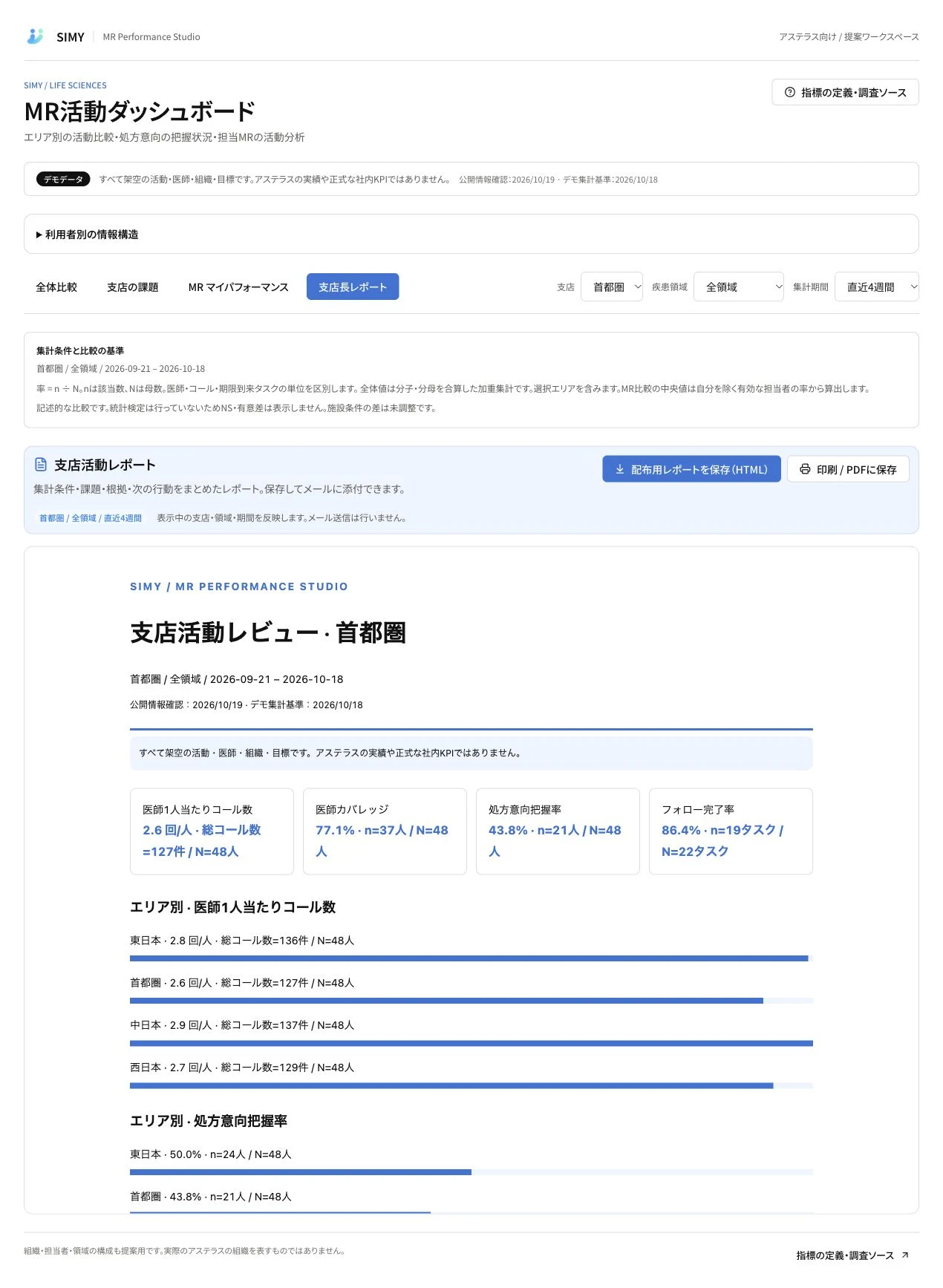
We propose a setup that brings together participation, strengths, challenges and repeat practice across branches and the company. Managers can identify where support is needed and use insights for priority training and individual coaching.
Individual practice
Branch overview
Company overview
Apply to training
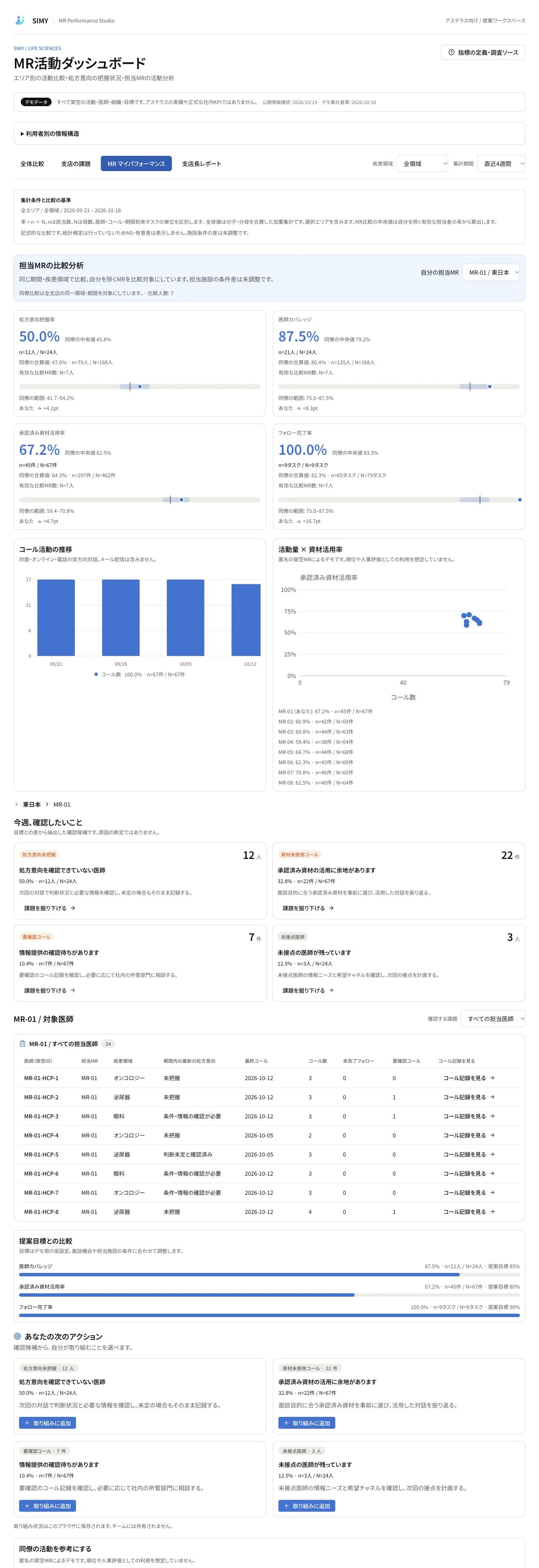
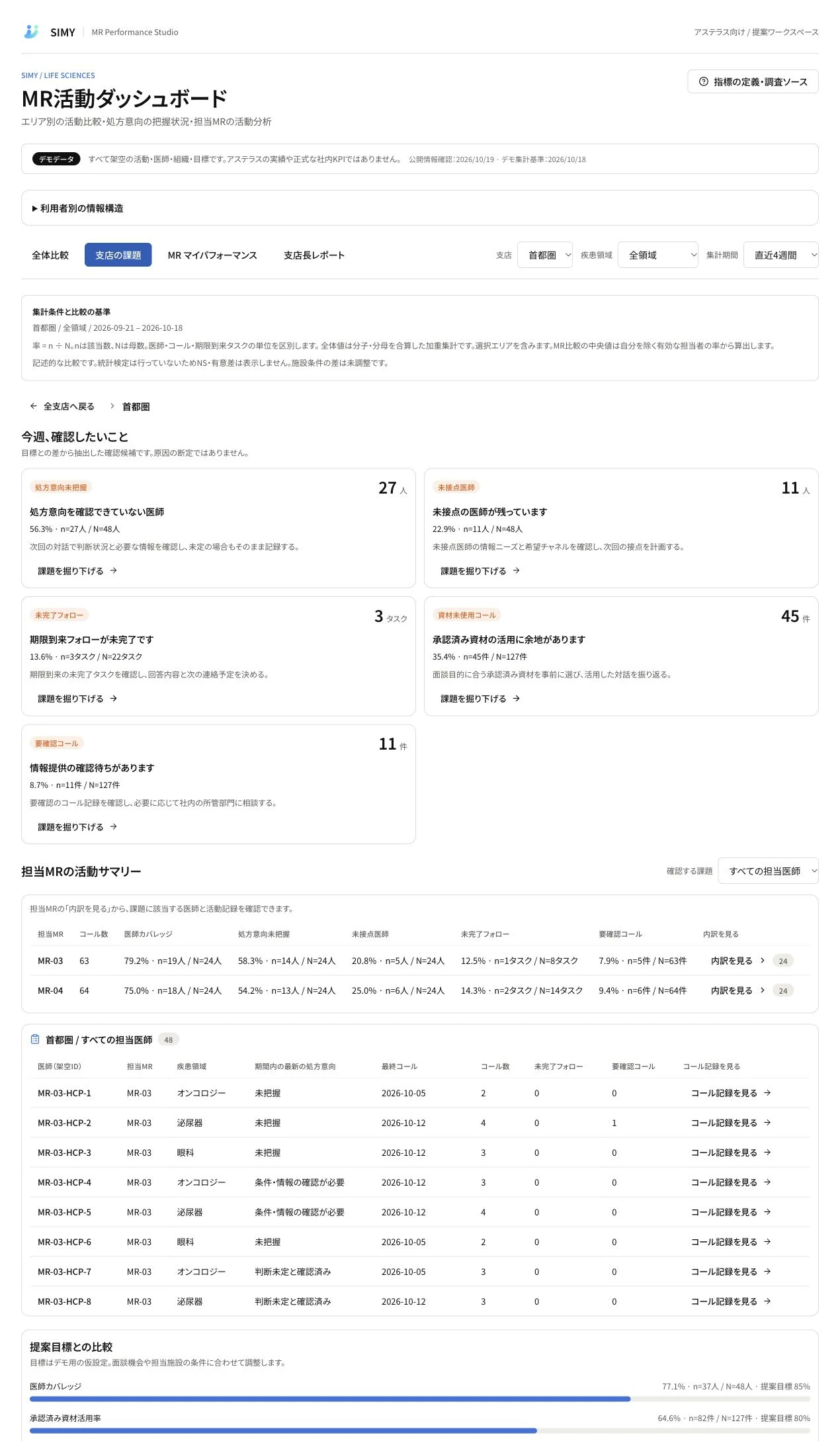
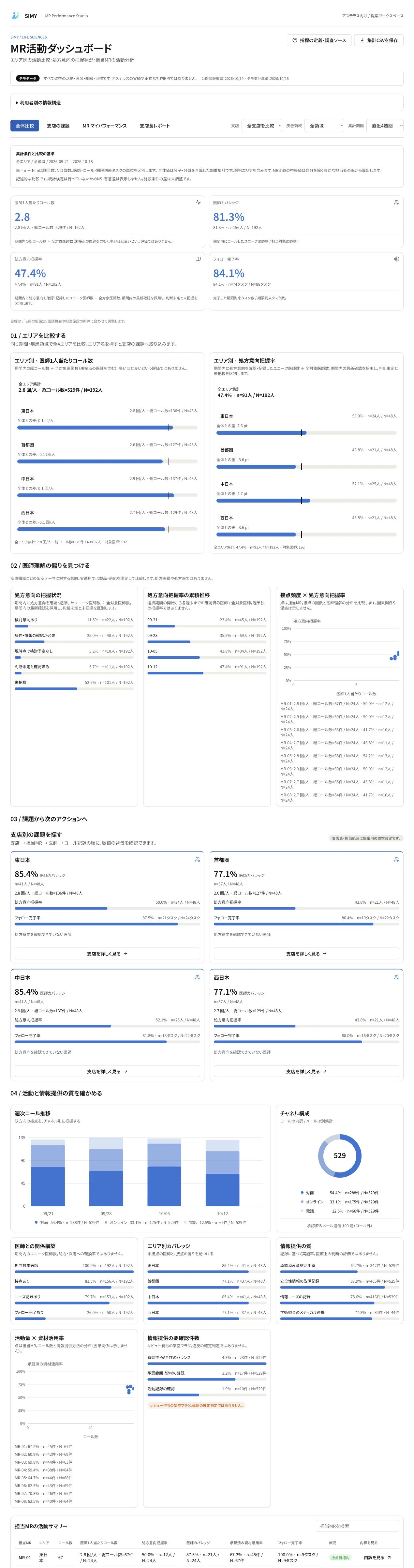
These Japanese reference screens come from the supplied presentation. All activities, doctors, organizations, goals and counts are fictional; they are not any company’s results or official KPIs. Assess practice and real meetings separately, and compare only when conditions and metrics align. Metrics, permissions and data integrations are agreed during implementation.
01 / MR · My performance
Reflect on activity. Plan the next step.
Compare with peers in the same period and field. Review rates, denominators and differences to reflect on your activity.
See differences in activity and understanding of doctors.
Compare contact counts and how often prescribing intentions have been clarified. Use differences from the overall picture to choose branches for closer review.
Prepare for your next real meeting. Let’s work on it together.
Tell us about the doctor, meeting purpose and materials or records you can use. We’ll work through doctor-specific practice, how to use it in the real meeting, and how to review what happened.


 Android availability